


Travis Hunter
Summary
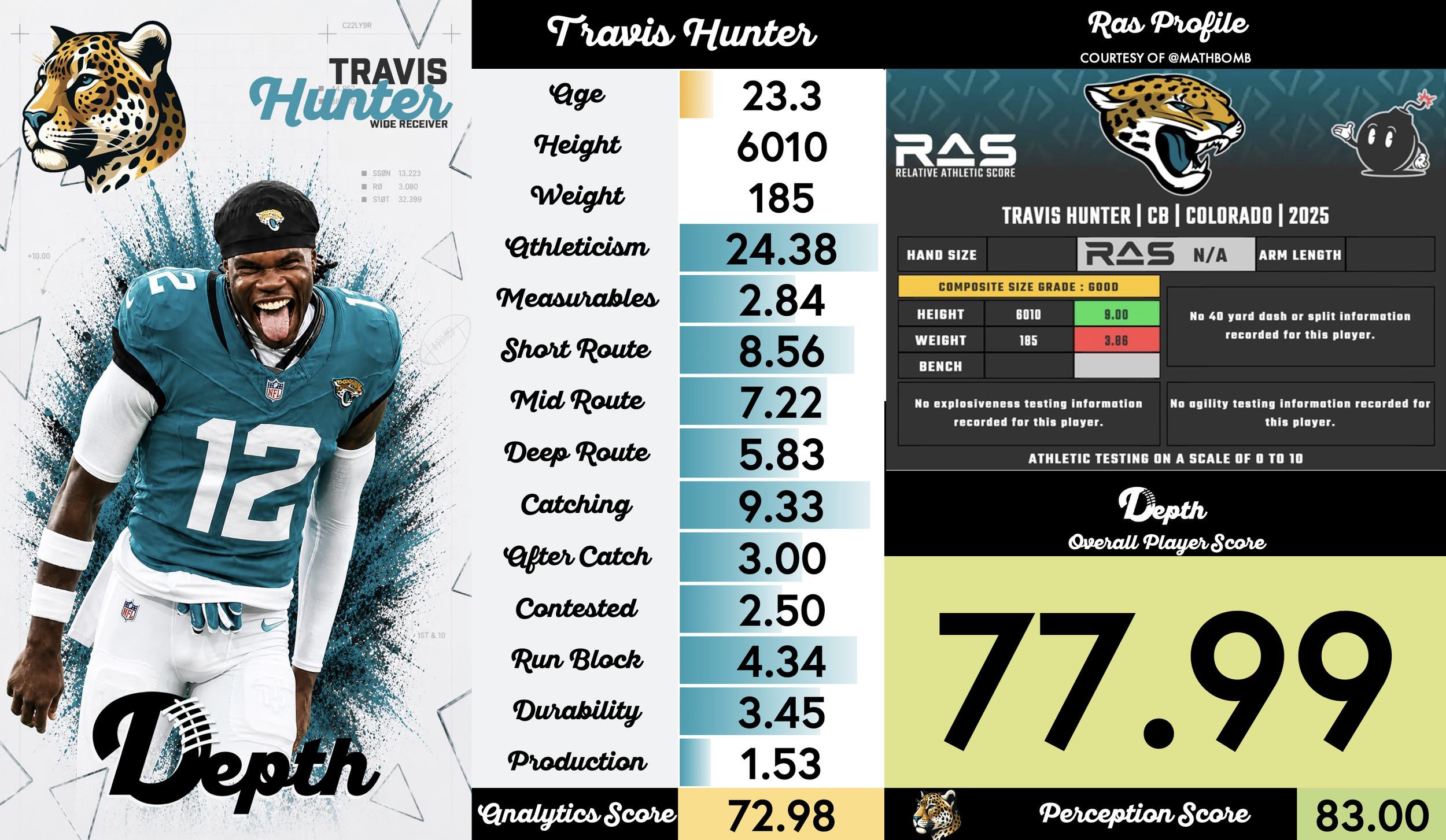
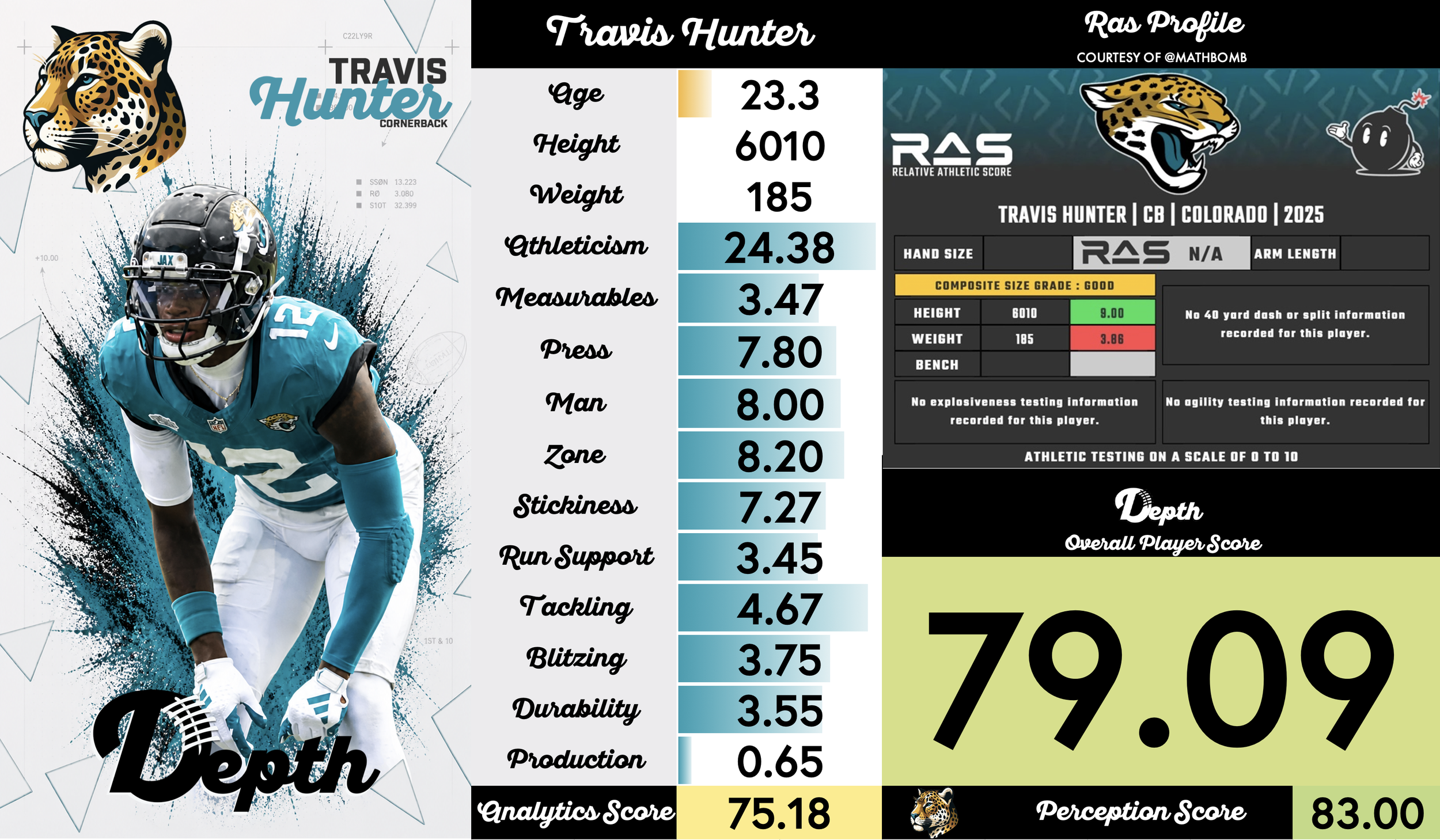
Travis Hunter was selected in Round 1 (#2 Overall) in the 2025 Draft out of University of Colorado. Hunter played two seasons at Colorado (after beginning at Jackson State) and became the rare two‑way star, earning the 2024 Heisman Trophy, Walter Camp Player of the Year, Chuck Bednarik Award (best defensive player), Fred Biletnikoff Award (best receiver), Paul Hornung Award (most versatile player), and AP College Football Player of the Year among other honors — becoming the first player to win both defensive and receiver awards in the same season. He finished his collegiate career with over 150 receptions for nearly 2,000 yards and 20 receiving touchdowns while also totaling nine interceptions and nearly 30 passes defended on defense. He dominated both sides of the ball and led the FBS in total snaps played, showcasing rare athleticism, instincts, and playmaking ability. In his rookie NFL season (2025), Hunter showed flashes on both offense and defense before suffering a season‑ending LCL knee injury, finishing with 28 receptions for 298 yards and a touchdown on offense, plus 15 tackles and three pass breakups on defense while playing significant snaps in both phases. Off the field, he has been noted for his professionalism, diligence in preparation, competitive spirit, and commitment to becoming a historic two‑way player, drawing comparisons to multi‑sport athletes for his versatility and drive.
Strengths
The Shohei Ohtani of Football: Rare blend of speed, agility, and stamina that allow him to impact games as both a wide receiver and a defensive back - a historically unique trait at the NFL level.
Playmaking Instincts: Natural ball skills lead to explosive plays and Hunter can track and haul in deep passes and jump routes on defense, converting turnovers and big offensive gains. Shows natural ability to read quarterbacks and make plays on the football as a corner, not merely mirroring routes.
Versatility & Football IQ: Despite a rough start with some pre-snap penalties on offense, Hunter succeeds in multiple roles and alignments; understands route concepts and coverage patterns at an advanced level for his age.
Competitive Toughness: Never shies from contact or challenging matchups; demonstrated resilience in handling enormous college workloads and immediate NFL responsibilities.
Weaknesses
Role Definition/Consistency: Still early in his pro development; the Jaguars have yet to fully define whether he will be primarily a receiver, primarily a corner, or genuinely two‑way, which can affect consistency and specialization, although he was slowly getting ramped up to harbor the load prior to his LCL injury suffered in practice.
Size/Physical Build: Hunter lacks the ideal physical bulk of many elite WRs and CBs and this could impact contested situations more frequently at the pro level.
Route Running Refinement: While productive, there are questions about his crispness on more nuanced route breaks against elite NFL press coverage. Hunter will need to rely more on technique and less on pure athletic prowess in the NFL level.
Knee Injury Concern: Suffered a season‑ending LCL knee injury as a rookie in 2025 and has been largely out of sight, out of mind since being placed on injured reserve.
Outlook
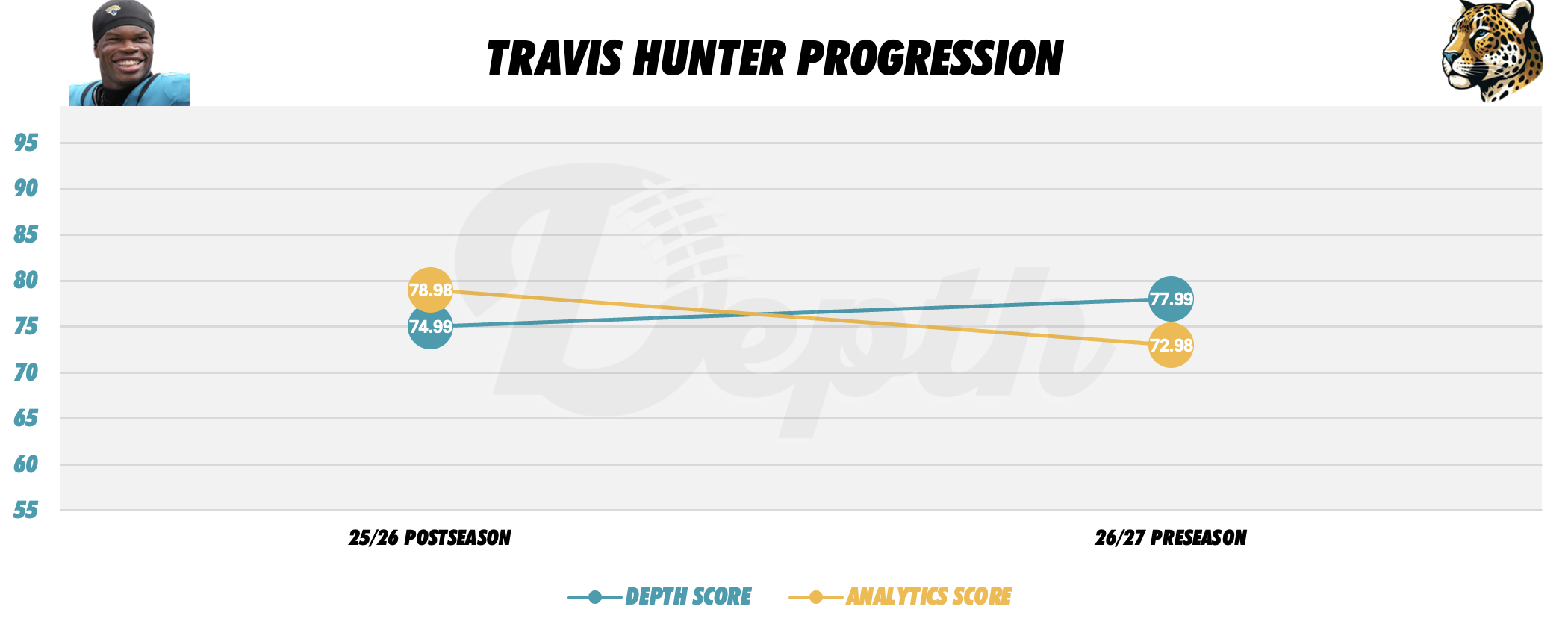
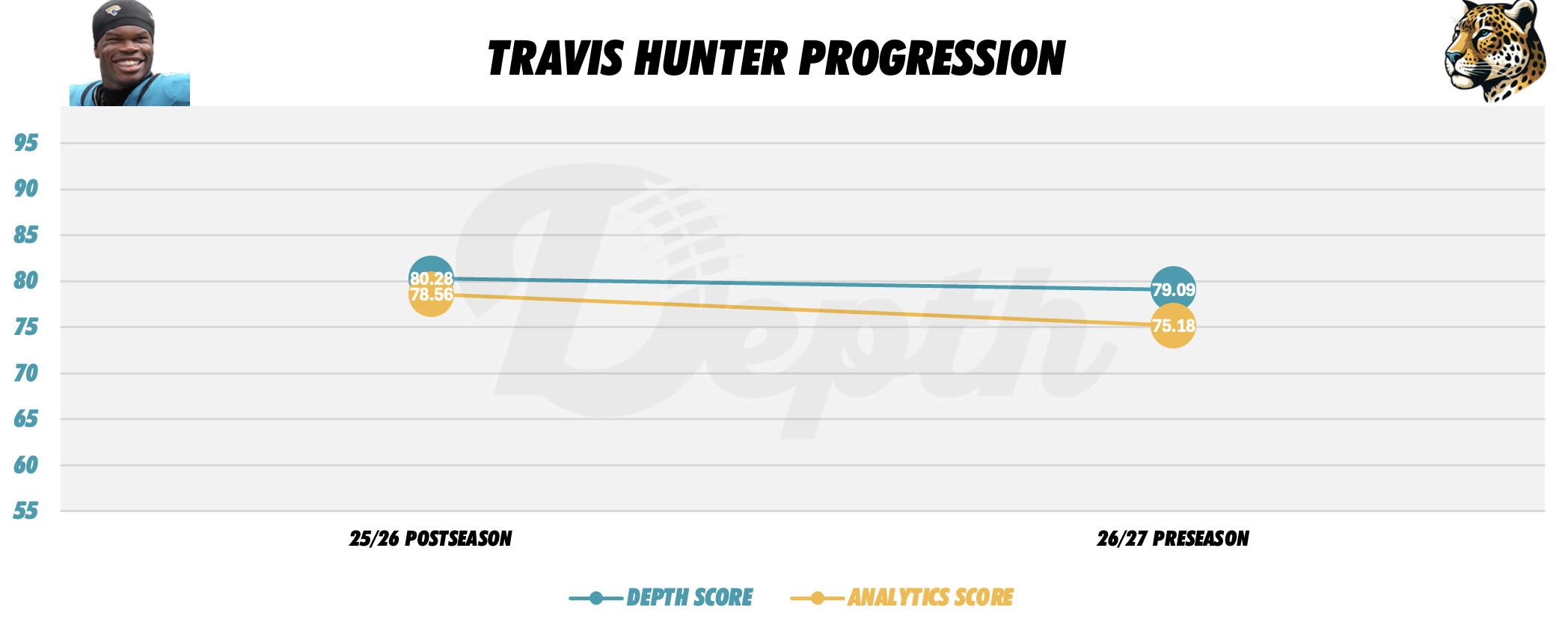
Hunter projects as a unique hybrid offensive/defensive weapon whose skill set challenges traditional NFL positional categories. His best fit will likely emerge in a scheme that creatively leverages his playmaking both as a wide receiver and in the secondary, potentially using him as a dynamic receiver who can line up all over the formation and as a coverage corner when advantageous. Hunter’s high football IQ and instincts allow him to grasp complex offensive and defensive concepts, and prior to his LCL injury, Hunter was being ramped up to playing full time at outside receiver and defensive back. Although his rookie season was curtailed by injury, Hunter’s athletic upside and historic collegiate production suggest the potential to become a transformational player — a No. 1 receiver with cornerback versatility or a matchup nightmare that forces defenses to game‑plan specifically for him. If he returns to full health and continues to refine his technical skills, Hunter could carve a path as one of the most impactful two‑way contributors in the league’s history, much like generational athletes in other sports who defied conventional positional roles.


Report written by Filip Prus